Who Controls Live Facial Recognition? NPR Examines New Orleans’ Model
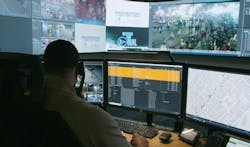
New Orleans has emerged as the first known U.S. city to deploy a live facial recognition surveillance system, a development that is drawing national attention and raising new questions for law enforcement agencies, private security organizations and technology providers, according to a NPR investigation.
The system, which scans faces in real time across parts of the city, is not operated directly by police. Instead, it is run by a private nonprofit organization, a structure that has placed the program at the center of an emerging debate over governance, oversight and accountability, according to NPR.
A privately operated surveillance network
The live facial recognition capability in New Orleans was developed and implemented by Project NOLA, a nonprofit organization founded by a former police officer. The group aggregates video feeds from thousands of cameras installed on private property across the city and, beginning in 2022, enabled live facial recognition on a subset of those cameras.
NPR reports that approximately 200 advanced cameras were configured to continuously scan faces in public areas, including high-traffic locations such as the French Quarter. The organization operates the system independently from city government, though it works closely with law enforcement.
How the system is used
Project NOLA’s system compares live video footage against a “hot list” of roughly 250 individuals. That list includes people wanted by law enforcement as well as individuals the nonprofit considers to be involved in violent criminal activity.
When the system identifies a potential match, Project NOLA personnel receive an alert and may then notify police, according to NPR. The facial recognition process itself runs continuously, scanning passersby in public spaces.
While New Orleans police initially received real-time alerts from the system, NPR reports that officers later paused their use of live notifications after determining the arrangement could conflict with local rules governing facial recognition technology.
Under city policy, police are permitted to use facial recognition for investigative purposes after a crime has occurred, but not for live, continuous tracking, particularly when operated by a third party. That distinction has become a focal point of legal and policy scrutiny.
Privacy and oversight concerns
Civil liberties advocates interviewed by NPR argue that the use of a private nonprofit to run live facial recognition could serve as a workaround to existing safeguards that restrict how police deploy surveillance technologies.
Because the cameras are mounted on private property and managed outside of formal law enforcement systems, critics told NPR that the program raises unresolved questions about constitutional protections, data governance, and who ultimately controls biometric surveillance in public spaces.
NPR also reports that many residents and visitors are unaware they may be subject to live facial scanning while walking through parts of the city. Reactions among those who were interviewed ranged from support for increased public safety to concern over the scope and permanence of the surveillance.
Why it matters to the security industry
For security professionals, the New Orleans case illustrates how facial recognition technology may advance faster than regulatory frameworks, particularly when private entities play a central role. As NPR notes, the model could influence how other cities and organizations explore biometric surveillance in environments where direct police deployment faces political or legal resistance.
The situation underscores broader industry questions around vendor responsibility, third-party data control, transparency, and compliance, especially as live biometric technologies move from investigative tools to real-time operational systems, according to NPR.
About the Author

Rodney Bosch
Editor-in-Chief/SecurityInfoWatch.com
Rodney Bosch is the Editor-in-Chief of SecurityInfoWatch.com. He has covered the security industry since 2006 for multiple major security publications. Reach him at [email protected].